
A community approach to protecting the Kootenays
Nature for Neighbourhoods combines technology, education and incentives to help residents remove invasive plants
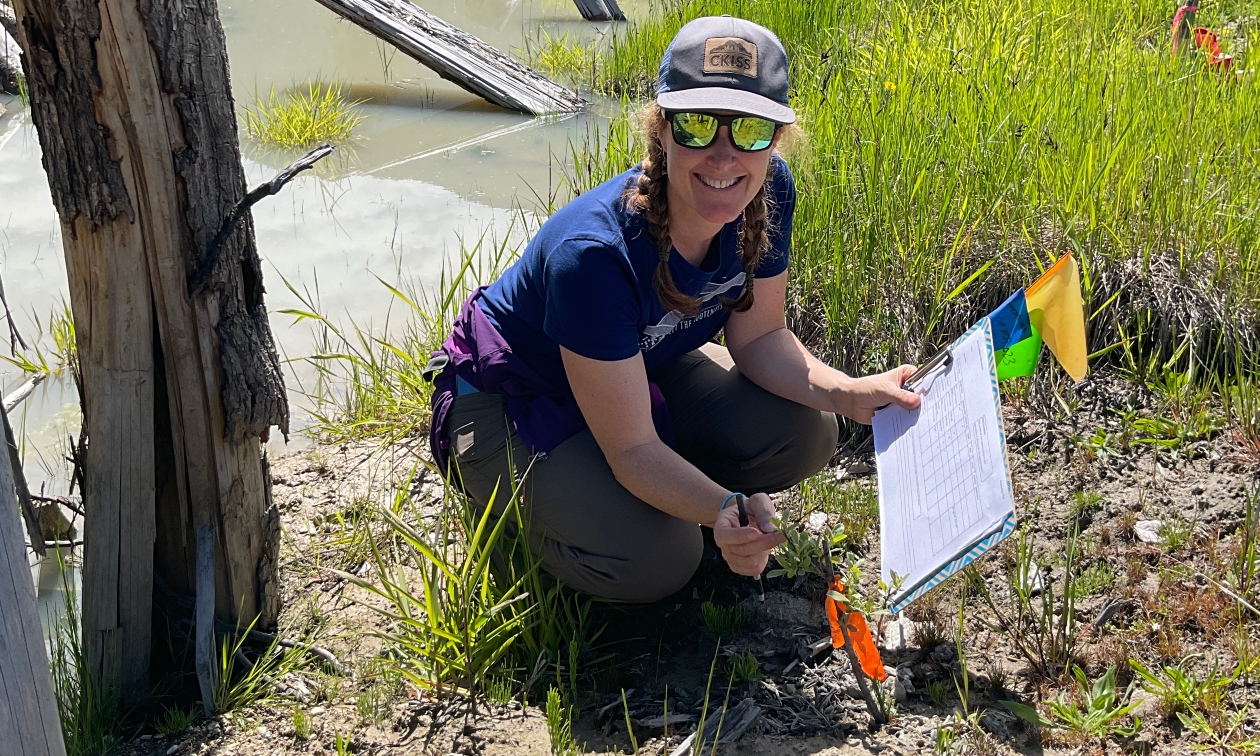
Laurie Frankcom conducting some native plant monitoring at the Harrop Wetland. — Photos courtesy of CKISS
Invasive plants are more than just an eyesore—they threaten biodiversity, increase wildfire risk and can spread quickly from one property to the next. While many people want to help protect the Kootenays' natural landscapes, knowing where to begin can often feel overwhelming.
The Central Kootenay Invasive Species Society (CKISS) hopes to change that through its Nature for Neighbourhoods program, an initiative that helps homeowners and renters remove invasive plants while earning rewards for their efforts. KootenayBiz spoke with Engagement Coordinator Laurie Frankcom about the inspiration behind the program, why backyard stewardship matters, and how small actions can create lasting environmental benefits across the region.
What inspired the creation of the Nature for Neighbourhoods program, and how did the idea first come together?
With so much climate change anxiety, we wanted to give people an opportunity to make a positive difference right in their own backyard. We know many people want to take action but aren't always sure where to start. At the same time, there is very little support available for private landowners and renters dealing with invasive plants on their property. We wanted to remove some of those barriers by providing education, easy-to-use tools, and a small financial incentive to encourage people to take action where they live.
The program takes a fun, game-like approach to encouraging people to tackle invasive species. How did that concept develop, and what made you decide to engage people this way?
The idea came after we learned about the Crowdsorsa app, which had been successfully used in Europe to engage citizens in environmental stewardship projects. We saw an opportunity to use technology to make invasive plant management more accessible and engaging, particularly for younger generations. The app allows participants to access identification resources, learn proper removal and disposal techniques, submit before-and-after photos and videos of their work, and earn rewards all from their phone. It makes participating simple, interactive, and rewarding.
How has the program been received so far? Have any early successes or participant stories stood out to you?
The response has been very encouraging. So far, 29 landowners and renters have registered for the program. Every time a participant submits their before-and-after photos or videos, it's a success. It's rewarding to see people taking ownership of invasive species management on their own property and knowing those small actions collectively make a meaningful difference across the region.
How significant is the invasive species challenge in the Kootenays, and what are some of the biggest concerns you're seeing today?
Invasive species are one of the greatest threats to biodiversity. They spread quickly, outcompete native vegetation, reduce wildlife habitat, and can negatively impact recreation sites, and local ecosystems. There are also economic impacts to our region, for example, increased management costs, impacts to agriculture, forestry, and tourism industries.
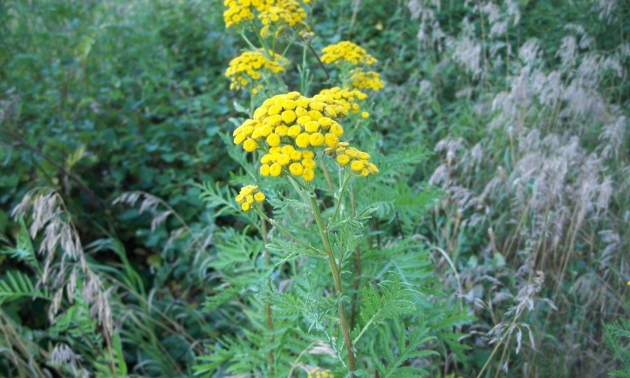
Common tansy spreads quickly and crowds out native vegetation if left unmanaged.
Many people assume invasive species are only a concern in forests or rural areas. Why is it important for homeowners, gardeners, and people living in urban neighbourhoods to pay attention as well?
Many invasive plants actually begin spreading from gardens and landscaped properties. Without management, they can quickly spread into neighbouring yards, parks, natural areas, and agricultural land. Many species produce thousands of seeds and spread rapidly because they lack the natural predators that keep them in check in their native range. Some invasive plants can also reduce property values, damage infrastructure, or create safety concerns. For example, Scotch broom increases wildfire risk because of its highly flammable oils. Managing invasive plants at home helps protect both your property and the surrounding environment.
What are some of the easiest steps people can take to make a positive impact in their own yards or communities?
The simplest step is to learn which invasive plants are growing on your property and remove them before they spread. We recommend visiting the species profiles on the CKISS website and using the iNaturalist app to help you ID plants where you live. Replacing them with native or non-invasive alternatives is one of the best long-term solutions. CKISS offers free resources through our EcoGarden and PlantWise programs to help people choose beautiful, regionally appropriate plants that support pollinators and local wildlife.
What role do native plants play in supporting biodiversity and helping reduce the spread of invasive species?
Healthy, diverse native plant communities are naturally more resilient and leave fewer opportunities for invasive species to become established. Native plants provide essential food and habitat for pollinators, birds, and other wildlife while helping restore healthy ecosystems. Choosing native species is one of the simplest ways homeowners can support biodiversity in their own yards. A bonus of the Nature for Neighbourhoods program is that the first 20 people to participate in the program will receive $20 in Eco Bucks to spend at the Kinseed Ecologies native fall plant sale.
Are there any common misconceptions about invasive plants or habitat restoration that you frequently encounter?
One of the biggest misconceptions is that if a plant is being sold at a garden centre, it must be safe to plant. In reality, some invasive plants, such as baby's breath and periwinkle, are still legally sold in parts of British Columbia. That's why we encourage gardeners to use trusted resources like CKISS's PlantWise and EcoGarden guides when selecting plants for their landscape.
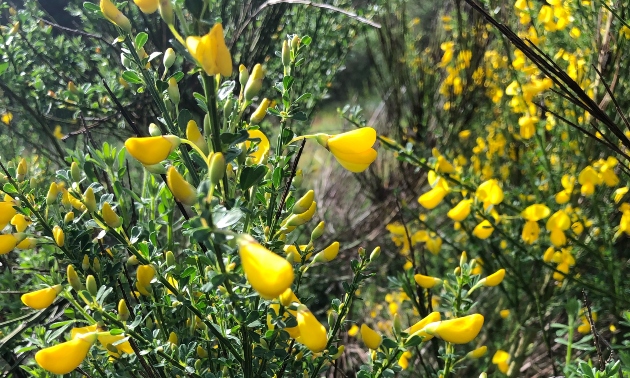
Scotch broom is highly invasive and increases wildfire risk because of its flammable oils.
What are your hopes for the future of Nature for Neighbourhoods, and what would success look like over the next few years?
We hope to see the program continue to receive funding so we can build on the momentum we've created. We'd like to see participation grow each year, expand the number of invasive species included in the program, and inspire more communities to become actively involved in protecting local ecosystems. Success would be seeing invasive species management become a normal part of caring for our homes and neighbourhoods.
Is there anything else you'd like KootenayBiz readers to know about the program or how they can get involved?
Every property owner and renter can make a difference. You don't need specialized equipment or experience, we just want you to be keen to learn and take action. Small actions taken by many people can have a tremendous impact on protecting the Kootenays' natural landscapes for future generations. We encourage anyone interested to visit CKISS.ca to learn more about the Nature for Neighbourhoods program, access free gardening resources, and find simple ways to get involved.




Comments