
Prepared for the unexpected
How Nelson's ALLSET Evacuation Backpacks is making emergency preparedness more accessible across Western Canada.

Kim Hartzell is helping Kootenay residents feel more prepared. — Photos courtesy of ALLSET Evacuation Backpacks
As wildfires, floods and other emergencies become an increasingly familiar reality across British Columbia, being prepared to leave home at a moment's notice is no longer something many people consider optional. Yet for many households, knowing where to start—or what to pack—can feel overwhelming.
For Nelson entrepreneur Kim Hartzell, that challenge sparked the creation of ALLSET Evacuation Backpacks, a preparedness system that combines emergency supplies with practical guidance designed to help people think clearly under pressure. Hartzell spoke with us about the inspiration behind the business, the importance of community resilience, and why emergency preparedness is becoming an essential part of everyday life.
What first inspired the idea for ALLSET Evacuation Backpacks, and can you tell us a bit about them?
Living in the Kootenays, where wildfire seasons are a reality and in some areas evacuations have become a real part of life.
I kept wondering what if a preparedness pack could be accessible and supportive to helping people navigate evacuation steps.
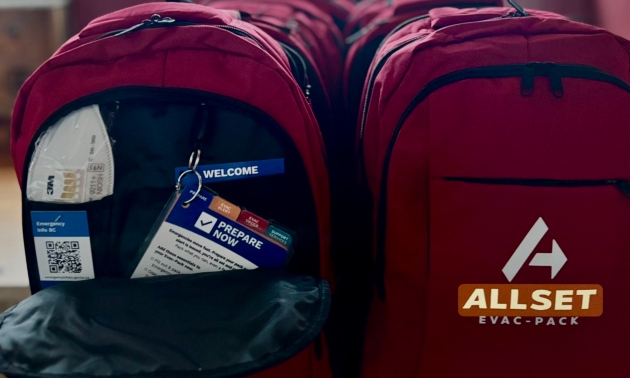
That led to the creation of ALLSET evacuation backpacks, where we pair essential emergency supplies with simple guidance tools, as a complete system.
A key part of the packs is our four-stage quick reference deck, which organizes preparedness guidance and input into a ready-to-use tool that is meant to be easy to follow under stress. It is meant to help households understand key stages, such as preparing in advance, evacuation alerts, evacuation orders, and support services. We always encourage people to follow local authorities and official emergency instructions during an emergency. ALLSET was created to make preparedness practical, accessible, and easier to act on.
What did the early days of getting the business off the ground look like?
The early days were all about research, learning, and listening. I completed introductory Emergency Support Services courses through the Justice Institute to better understand how evacuations in British Columbia work, including the supports and planning involved when communities are displaced.
I also connected with emergency management coordinators, organizations, evacuees, and people with frontline experience. This helped us understand what kind of tools would be most practical and useful during evacuations and why.
From there, we built and refined ALLSET using feedback to shape what it is today.
I’m also very grateful to have worked closely with Community Futures, whose training, mentorship, and practical support made a significant contribution to getting ALLSET off the ground.
Talented local partners helped bring ALLSET to life. Stephen Cretney at The Forest has played a key role in helping bring ALLSET to life through creative direction, website design, photography, resource tools, and print materials. Paddy Duddy at Big Cranium was also a big support and worked to create our logo, early visual materials, and apparel.
How do you see the need for emergency preparedness evolving in the Kootenays?
There is growing awareness that evacuations are a real part of our reality moving forward. Because of that, emergency preparedness is becoming more community-focused and actionable, with stronger community connections playing an important role in how we support one another when emergencies happen.
It’s encouraging to see communities, organizations, and initiatives like FireSmart building resilience from the ground up.
What makes your product stand out from other preparedness options?
What makes our products especially unique is that we pair the essential supplies people need with information tools that are easy to use under stress.
Our packs are also durable, designed for real use and for the packing of personal items with longevity in mind.
Together, that makes it easier for households to take meaningful steps to prepare and be ready to go when needed.
What are your goals for ALLSET moving forward?
Our goal is to continue supporting the people of Western Canada with practical preparedness tools that are genuinely helpful.
We believe grab-and-go packs are becoming a standard household essential.
We hope to keep improving our products through collaboration and make preparedness more accessible for more people.
Who are your typical customers, and what situations are they preparing for?
Our customers and audiences include municipalities, regional districts, public agencies, organizations, Indigenous communities, households across Western Canada, and Emergency Support Services programs.
We also support ESS teams with specialized deployment packs for volunteers and support workers.
Most are preparing for evacuations related to wildfire, flood, or other emergencies where people may need to leave home quickly.
Many people may expect there to be disruptions in remote locations, but service interruptions such as water, power, or cell service can also affect larger cities and communities during major wildfire events.
Have there been any customer moments or feedback that really stood out to you?
One of the most rewarding parts of this work has been the opportunity to build relationships and work alongside communities and organizations. It’s been very encouraging to hear that the tools feel useful and relevant for people preparing for emergencies.
That is incredibly meaningful to us.
We’ve also had many inspiring experiences at conferences and events, meeting people who are working hard every day to support and protect their communities.
What are some of the most common gaps you see when people think they’re prepared, but aren’t quite there yet?
One common gap can be having a simple household emergency plan that is shared with the people in your home.
Some people have supplies, but haven’t yet had the chance to talk through where they might meet, who an out-of-area contact would be, plans for pets, or how they could support one another and their community if they needed to leave quickly.
Having those conversations, or planning in advance, can help with some of those harder decisions and actions before time is limited and stress is high.



Comments